
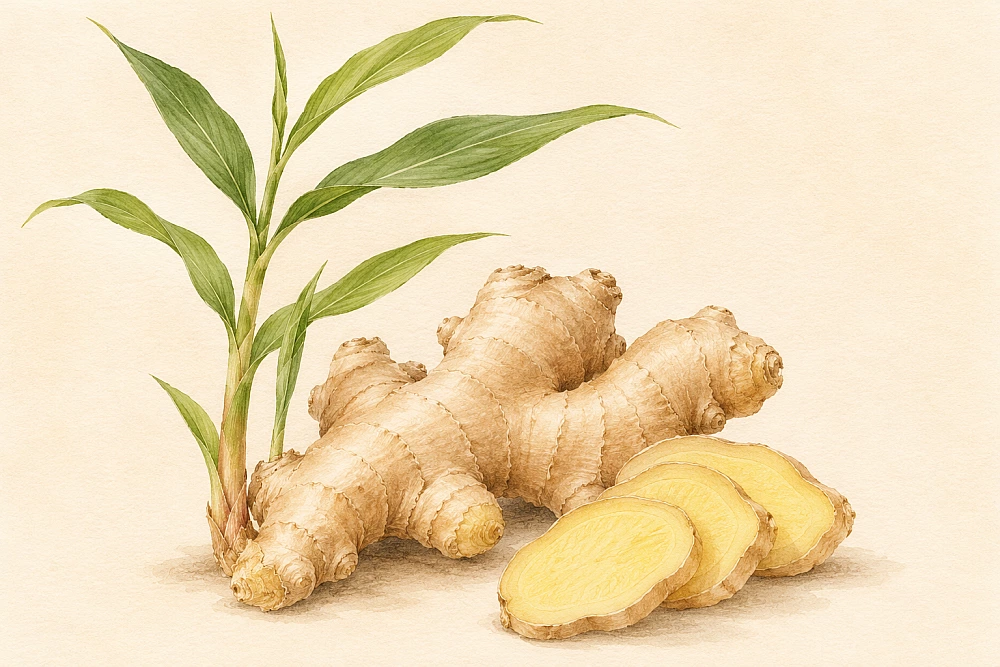
Ginger’s familiar knobbly shape belongs to an underground stem called a rhizome. It is the part of the plant used as the aromatic spice, and it also appears in botanical preparations. Its story brings together plant structure, culinary traditions and a long history of trade. 1
Getting to know Zingiber officinale
The ginger plant is Zingiber officinale. Kew describes its thick, branching rhizome as brown on the outside with a yellow interior. Above ground, shoots carry narrow leaves. The piece sold as “ginger root” is therefore an underground stem in botanical terms. 1
A spice that travelled
Kew’s species profile places ginger among the early spices carried from Asia into Europe, reaching the classical world through traders. Over the centuries, the fresh ingredient and its dried, powdered counterpart found different places in cooking. The plant’s history is also a history of how people preserved, transported and used an aromatic crop. 2
A Kew account of festive spices recalls a time when serving ginger in Europe could signal wealth and the importance of a guest. Its place in gingerbread and other sweet preparations gives this botanical ingredient a cultural history that extends well beyond the supplement shelf. 3
Alongside its culinary history
Ginger has also been part of traditional herbal practice since ancient times. The NIH National Center for Complementary and Integrative Health records that history while reviewing modern research separately. Historical use tells us about a tradition; evaluating a product today requires information about its particular preparation and ingredients. 4
Reading the preparation on a label
Dried ginger powder and a ginger extract describe different preparations. For example, EMA’s account of ginger medicines distinguishes powdered dried rhizome from tinctures made by extracting it with alcohol. That description explains a preparation method; it does not identify the preparation or alcohol content of an unrelated supplement. 5
The wording on the individual label remains important. “Ginger” and “ginger root” can be encountered in ingredient lists; more detailed information about quantity or preparation should be read from the specific product.
Ginger in the Healthier U range
The following formulas list ginger with other botanical ingredients. Their ingredient wording is kept distinct below.
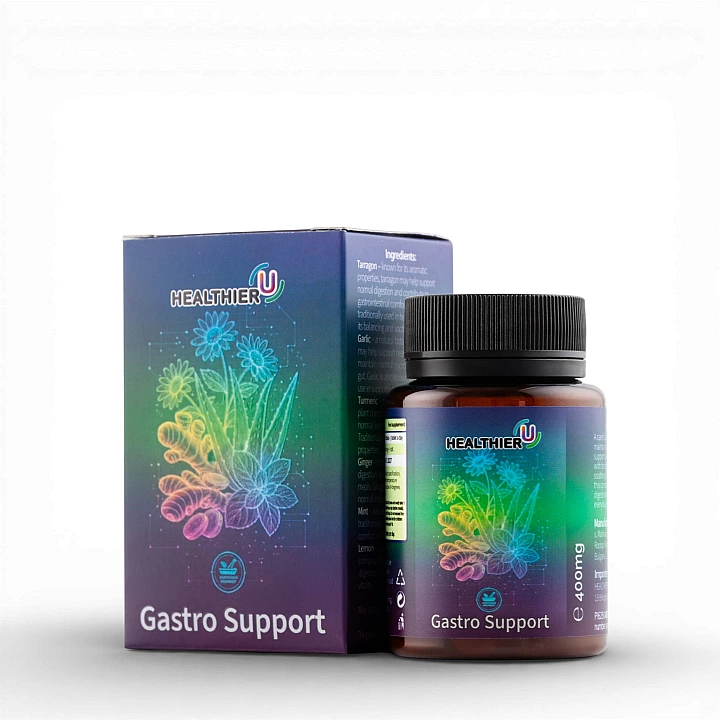
Gastro Support (GS)
Listed ingredients: Tarragon, Garlic, Turmeric, Ginger, Mint, Lemon.
May contain traces of lactose.
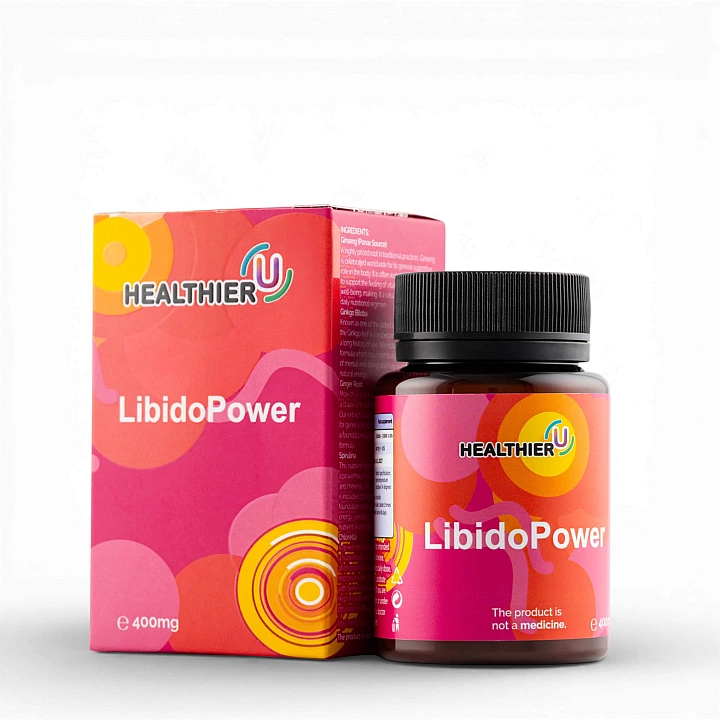
Libido Power (LP)
Listed ingredients: Ginseng, Ginkgo biloba, Ginger root, Spirulina, Chlorella.
May contain traces of lactose.
Before choosing a product
Food supplements complement a varied diet. Follow the label; discuss suitability with a healthcare professional if you take medicines or have a medical condition. 6